


Features:
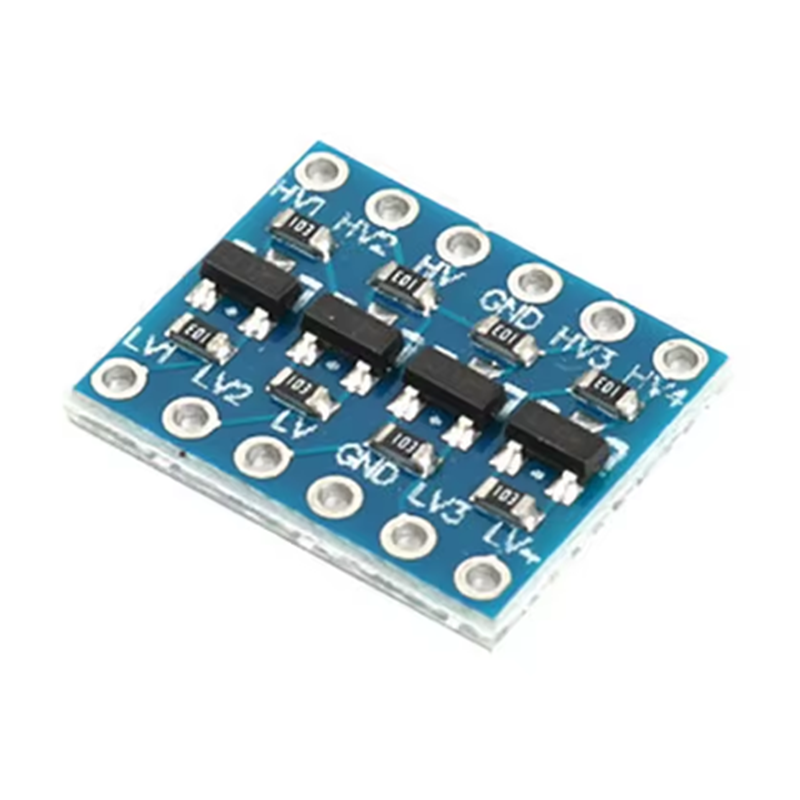
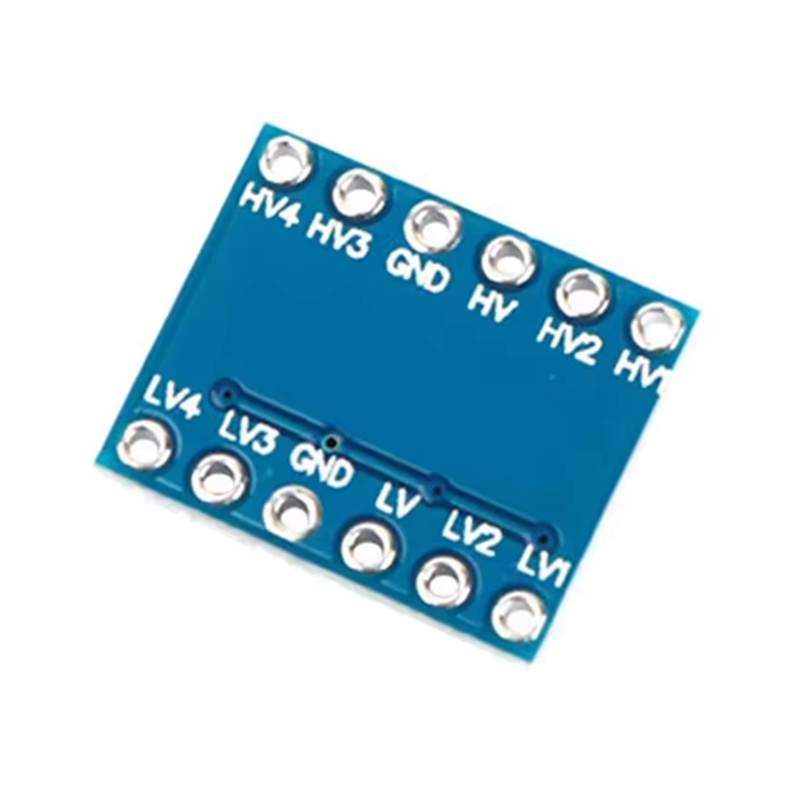
The board needs to be powered from the two voltages sources (high voltage and low voltage) that your system is using.
High voltage (5V for example) to the ¡HV¡¯ pin, low voltage (3.3V for example) to ¡LV¡¯, and ground from the system to the ¡GND¡¯pin.
For example: High voltage is 5V, low voltage is 3.3V
HV connect with 5V power supply
LV connect with 3.3V power supply
GND connect the power negative pole
LVx input/output 3.3V TTL
HVx input/output 5V TTL
Bi-Directional transform between LVx and TVx
The board needs to be powered from the two voltages sources (high voltage and low voltage) that your system is using.
High voltage (5V for example) to the ¡HV¡¯ pin, low voltage (3.3V for example) to ¡LV¡¯, and ground from the system to the ¡GND¡¯pin.
For example: High voltage is 5V, low voltage is 3.3V
HV connect with 5V power supply
LV connect with 3.3V power supply
GND connect the power negative pole
LVx input/output 3.3V TTL
HVx input/output 5V TTL
Bi-Directional transform between LVx and TVx
Pin Outs:
- HV – High voltage (5V)
- LV – Low voltage (3.3V)
- GND – Ground
- HV1–HV4 – High voltage signal channels
- LV1–LV4 – Low voltage signal channels
Specifications:
- Low voltage range: 1.8V – 3.3V
- High voltage range: 3.3V – 5V
- Supports I2C, UART, SPI, and other communication interfaces
- Automatic bidirectional conversion
- No direction control required
- Suitable for open-drain signals
- Compatible with multiple logic standards
- Compact size, easy to integrate Serial communication (UART, I2C, SPI)
- Connect HV to high-voltage power ( 5V)
- Connect LV to low-voltage power ( 3.3V)
- Connect GND to common ground
Wiring signal pins:
-
- HV1 ↔ LV1
- HV2 ↔ LV2
- HV3 ↔ LV3
- HV4 ↔ LV4




Reviews
There are no reviews yet.